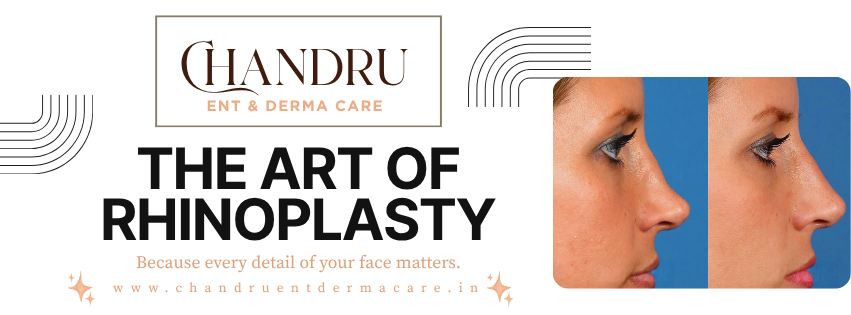
What Is Rhinoplasty?
Rhinoplasty refers to procedures that reshape or refine the nose. Depending on the concern, this can mean:
- Subtle, focused refinements to specific areas such as the nasal tip
- More involved corrections that address the overall structure of the nose
Some refinements may be achieved with less invasive techniques, while structural changes generally require a surgical approach. It is important to understand that not every concern can be addressed the same way — the suitable technique is decided only after a detailed consultation and examination.
🌿 Common Areas of Refinement
Depending on individual assessment, rhinoplasty techniques may focus on areas such as:
1. NASAL TIP CORRECTION
Refining the shape or definition of the nasal tip for better balance with the rest of the nose.
2. NASAL TIP REFINEMENT
Subtle reshaping to improve the appearance and definition of the tip.
3. DROOPY TIP LIFT
Addressing a downward-pointing nasal tip to improve proportion and profile.
4. BULBOUS TIP REDUCTION
Refining a rounded or wide nasal tip for a more defined appearance.
5. TIP PROJECTION ENHANCEMENT
Adjusting how much the tip projects to support overall facial harmony.
The specific technique is always tailored to the individual — there is no single standard approach suitable for everyone.
💆 Surgical vs. Non-Surgical Approaches
It helps to understand that "rhinoplasty" is not one single procedure.
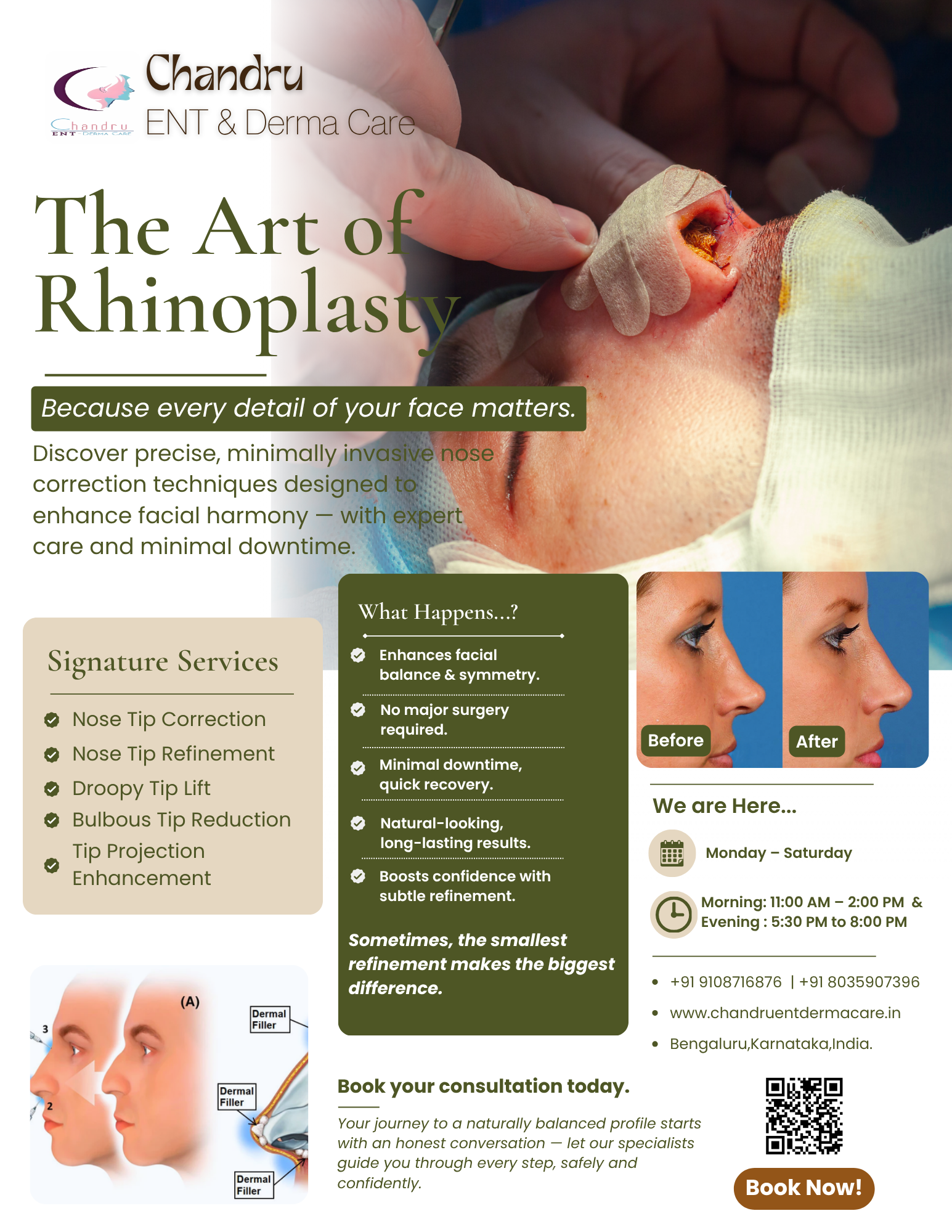
- Non-surgical refinements may use techniques such as carefully placed fillers to make subtle changes. These are temporary, involve less downtime, and suit only certain, limited concerns.
- Surgical rhinoplasty can address structural changes more comprehensively. It involves a recovery period and the usual considerations of a surgical procedure.
Which approach is appropriate — or whether either is suitable at all — depends entirely on your anatomy and goals, as assessed by a qualified professional. A consultation is essential to understand which option, if any, fits your situation.
🌟 Who Might Consider Rhinoplasty?
Rhinoplasty may be considered by people who:
- Feel the shape or proportion of their nose affects facial balance
- Have specific concerns about the nasal tip
- Wish to refine their profile for better harmony
- Have realistic expectations about what can be achieved
- Are assessed as medically suitable during consultation
Suitability is always determined individually. A qualified professional will assess your anatomy, discuss your goals and advise on the most appropriate option — including whether a procedure is advisable at all.
🩺 What to Expect
Understanding the process helps you feel informed and prepared.
- Consultation and assessment — Your nose, facial proportions, breathing, medical history and goals are evaluated in detail
- Discussion of options — Surgical and non-surgical possibilities are explained, along with what each can and cannot achieve
- Planning — The approach is tailored to your individual anatomy
- The procedure — Depending on the chosen technique, this may be a focused refinement or a surgical procedure
- Recovery — The recovery period depends on the approach, from minimal downtime for subtle refinements to a longer healing phase for surgery
Your clinician will explain exactly what to expect for the specific approach recommended for you.
⏳ Recovery and Healing
Recovery varies significantly depending on whether the approach is surgical or non-surgical.
General points to keep in mind:
- Non-surgical refinements typically involve minimal downtime, though mild swelling or tenderness can occur
- Surgical rhinoplasty involves a longer recovery, with swelling that settles gradually over weeks to months
- The final result becomes clear only after swelling fully resolves, which can take time, especially after surgery
- Follow-up visits help monitor healing
Patience matters — particularly with surgical rhinoplasty, where the true outcome emerges gradually.
🚫 Setting Realistic Expectations
Clear, honest expectations are essential for any facial procedure.
Rhinoplasty does not:
❌ Deliver an instant final result, especially when surgical
❌ Produce an identical "ideal" nose for everyone
❌ Guarantee a specific outcome regardless of anatomy
❌ Replace the need for careful assessment and planning
❌ Come without recovery or, in surgical cases, potential risks
The aim is a natural-looking, balanced result in harmony with your own features — not a standardised or dramatic change.
⚠️ Safety, Risks and Who Should Be Cautious
Every procedure carries considerations, and surgical rhinoplasty in particular involves potential risks that your clinician will explain in detail during consultation — these can include swelling, bruising, altered sensation, breathing changes, and, as with any surgery, a risk of infection or healing-related complications.
A procedure may not be advisable for people who:
🔴 Have unrealistic expectations about the outcome
🔴 Have active infection or inflammation in the area
🔴 Have certain medical conditions affecting healing or clotting
🔴 Are pregnant or breastfeeding
🔴 Have specific concerns identified during medical assessment
This is why thorough evaluation, informed consent and an honest discussion of risks always come first. Any procedure should be carried out only by a qualified professional in an appropriate clinical setting.
💆 A Thoughtful, Individualised Approach
At Chandru ENT & Derma Care, our approach to any facial procedure begins with understanding your features, your concerns and what is realistically achievable.
Because the nose is so central to facial balance, our focus is on careful assessment, honest guidance and an approach suited to your individual anatomy — prioritising natural-looking harmony over a one-size-fits-all result.
Considering Rhinoplasty? Start With an Honest Conversation.
Your journey to a naturally balanced profile begins with a detailed assessment. A qualified professional can discuss which approach — surgical, non-surgical, or neither — suits your features and goals, and guide you through every step, safely and clearly.
Chandru ENT & Derma Care
Trusted Care • Qualified Doctors • Patient-Focused Treatment
Medical Disclaimer: This article is intended for general health and aesthetic education only and does not constitute medical advice, diagnosis or a recommendation for any procedure. Rhinoplasty includes both surgical and non-surgical techniques whose suitability, risks and results depend on individual factors. Results vary from person to person and are not guaranteed. Always consult a qualified, registered professional for personalised advice and a full discussion of risks before considering any treatment.
 ENT Treatment Skin Care Hair Treatment Cosmetology Laser Treatments Facial Surgery
Leave a Comment