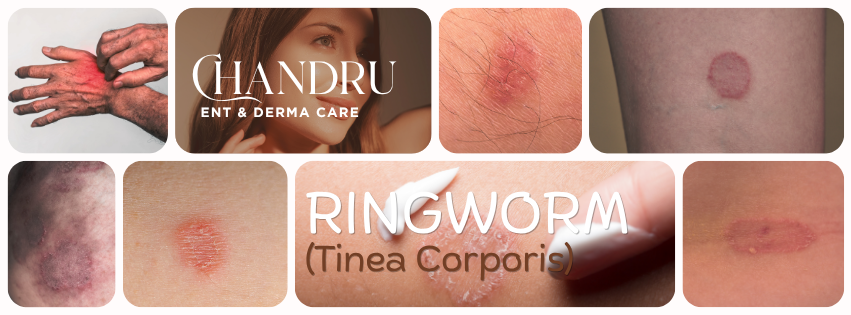
🌿 What Is Ringworm?
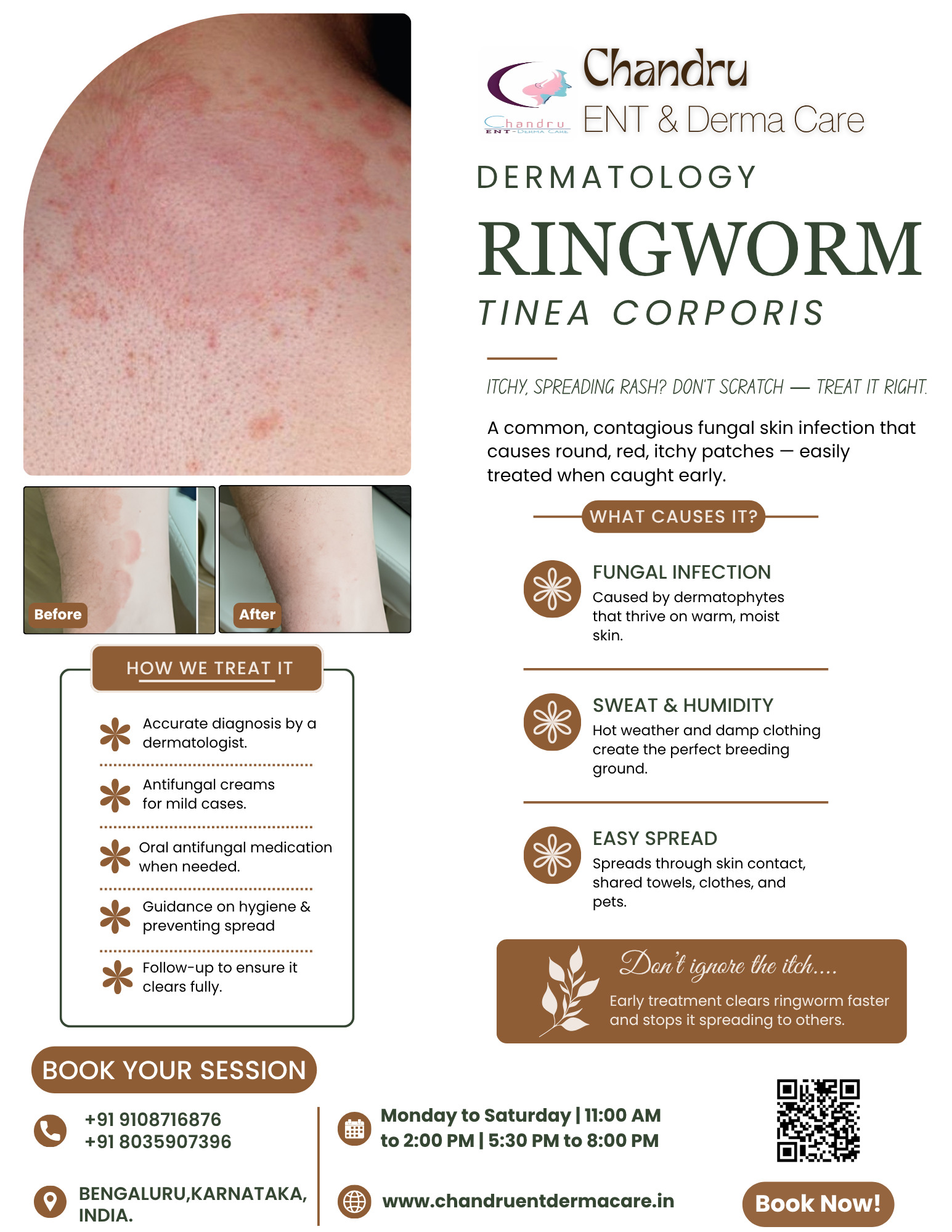
Are you experiencing red, itchy, circular patches on your skin? These may be signs of ringworm (Tinea corporis), a common fungal skin infection. Despite its name, ringworm is not caused by a worm. It is caused by fungi that grow on the outer layer of the skin.
Ringworm can affect different parts of the body and may spread if left untreated. The good news is that early diagnosis and appropriate antifungal treatment can help clear the infection.
🔍 What Causes Ringworm?
🍄 Fungal Infection: Dermatophyte fungi grow on the skin and cause redness, itching and ring-shaped patches.
💦 Sweat & Humidity: Hot, humid weather and prolonged sweating can encourage fungal growth.
🤝 Direct Contact: Ringworm can spread through contact with an infected person or animal.
👕 Contaminated Items: Sharing towels, clothing, bedsheets or other personal items may spread the infection.
⚠️ Common Symptoms of Ringworm
🔴 Round or ring-shaped red patches.
🌡️ Itching and skin irritation.
🍃 Raised, scaly edges with clearer skin in the center in some cases.
📈 Patches that gradually enlarge or spread to nearby areas.
🧴 How Is Ringworm Treated?
1. Antifungal Creams
Topical antifungal medicines, such as clotrimazole or terbinafine, may be recommended for localised skin infections. The choice and duration of treatment depend on the infection and the product instructions.
2. Oral Antifungal Medicines
For extensive, persistent or difficult-to-treat infections, a doctor may prescribe oral antifungal medicines after evaluating the patient.
3. Proper Hygiene
Keep the affected area clean and dry. Change sweaty clothing promptly and wash towels and clothes regularly.
4. Medical Follow-Up
Consult a dermatologist if the infection spreads, keeps returning or does not improve with treatment.
🚫 Important: Avoid using steroid-containing combination creams without medical advice. Steroids can mask ringworm symptoms and allow the fungal infection to worsen or spread.
🌞 Tips to Prevent Ringworm
✅ Keep your skin clean and dry.
✅ Wear loose-fitting, breathable clothing.
✅ Change out of sweaty clothes promptly.
✅ Do not share towels, clothing or personal grooming items.
✅ Wear footwear in shared showers and changing rooms.
✅ Complete the recommended antifungal treatment, even if symptoms improve earlier.
💚 Get Expert Skin Care at Chandru ENT & Derma Care
Ringworm is common and treatable, but the right diagnosis is essential because other skin conditions can look similar.
At Chandru ENT & Derma Care, Bengaluru, patients can seek professional guidance for fungal skin infections and other dermatological concerns.
📍 Location: Bengaluru, Karnataka, India
📞 Book your dermatology consultation for appropriate diagnosis and treatment.
❓ Frequently Asked Questions
Q1. Is ringworm contagious?
Yes. It can spread through direct contact with infected skin, animals or contaminated personal items.
Q2. Can ringworm go away on its own?
It may persist or spread without treatment. Appropriate antifungal medication is usually recommended.
Q3. How long does ringworm take to heal?
Many localised infections improve with a few weeks of appropriate treatment, although the duration varies depending on severity and the medicine used.
Q4. Can I use a steroid cream for itching?
Do not use steroid creams on suspected ringworm unless specifically advised by a qualified healthcare professional. They can worsen or disguise the infection.
🌟 Conclusion
Ringworm can cause discomfort, itching and spreading skin patches, but early diagnosis and correct antifungal treatment can help manage the infection effectively. Good hygiene, keeping the skin dry and avoiding shared personal items can reduce the risk of spreading it.
Chandru ENT & Derma Care — Helping You Make Informed Choices for Healthier Skin!
Disclaimer: This article is for educational purposes only and does not replace professional medical advice, diagnosis or treatment. Use medicines as directed by a qualified healthcare professional.
 ENT Treatment Skin Care Hair Treatment Cosmetology Laser Treatments Facial Surgery
Leave a Comment