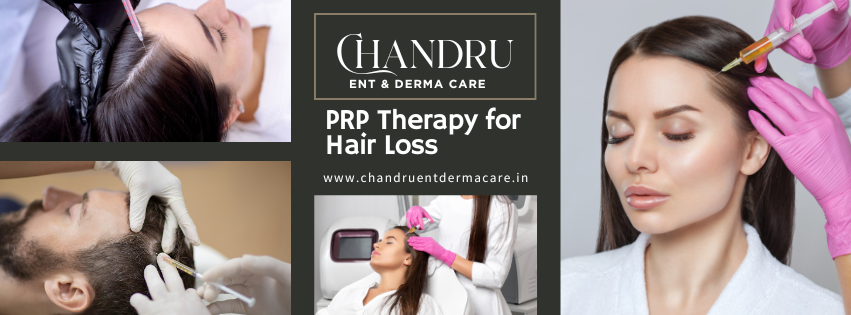
How does PRP work?
The basic concept is simple:
Your blood → platelet-rich plasma → targeted scalp treatment
PRP is intended to support weakened or miniaturising hair follicles and may help improve hair density and thickness in appropriately selected patients. Clinical studies and systematic reviews have reported improvements in hair density with PRP, although the quality and consistency of evidence remain variable.
It is therefore best viewed as a hair-growth-supportive treatment, not a guaranteed cure for every type of hair loss.
Potential Benefits of PRP
✔ Uses your own blood
Because the PRP is prepared from the patient's own blood, it is an autologous treatment.
✔ Non-surgical approach
PRP does not involve hair transplantation or surgical removal of tissue.
✔ May improve hair density
Research suggests PRP can increase hair density in some patients with androgenetic alopecia.
✔ May improve the appearance of thinning hair
Some patients experience improvement in hair thickness and overall scalp coverage.
✔ Can be part of a personalised hair-loss plan
Depending on the diagnosis, PRP may be considered alongside other evidence-based treatments rather than as a replacement for them.
Who may benefit?
PRP is most commonly studied for androgenetic alopecia (pattern hair loss). However, hair loss has many possible causes—including nutritional deficiencies, thyroid disorders, hormonal changes, autoimmune conditions and scalp diseases.
The first step should therefore be finding out why the hair is falling.
A dermatologist may assess the scalp, pattern of hair loss, medical history and, when appropriate, recommend investigations before deciding whether PRP is suitable.
What should you expect?
PRP is generally performed as a series of sessions, rather than a single treatment. The exact number and interval should be determined by the treating dermatologist based on the diagnosis and response.
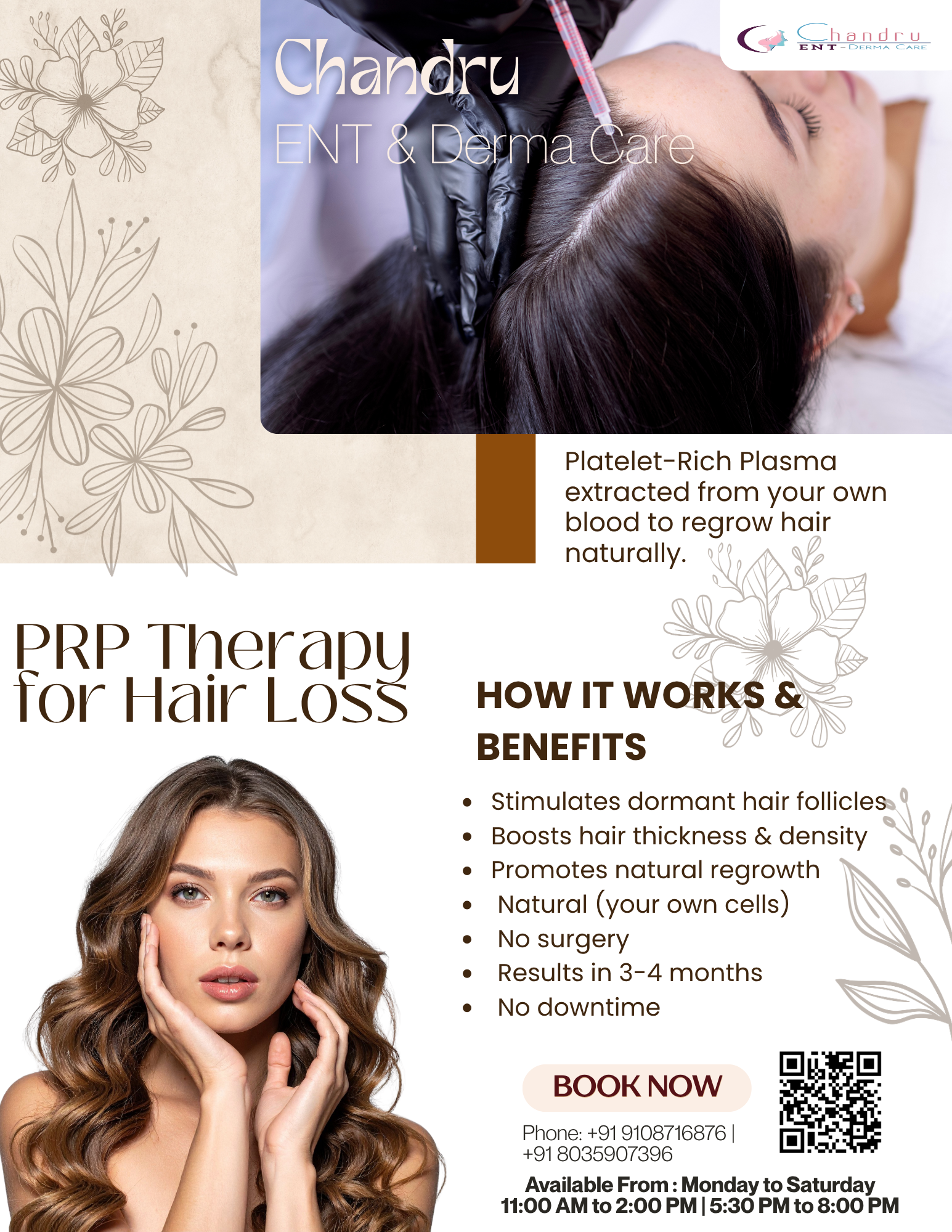
The poster mentions results in 3–4 months, but this should be presented as a possible timeframe rather than a guarantee. Hair growth is gradual, and individual responses vary.
Temporary tenderness, redness or swelling at injection sites can occur. Your dermatologist will provide specific pre- and post-treatment instructions.
A Dermatologist's Advice
PRP is promising—but it isn't magic.
The quality of PRP preparation, platelet concentration, injection technique, treatment schedule and the underlying cause of hair loss can all influence outcomes. Research also shows considerable variation between PRP protocols, so there is no single universally accepted preparation or treatment regimen.
At Chandru ENT-Derma Care, the goal should be to first understand the cause and pattern of hair loss and then decide whether PRP is appropriate for you.
Healthy hair begins with the right diagnosis.
Individual results vary. PRP is a medical procedure and should be performed following appropriate clinical assessment, sterile technique and a personalized treatment plan. PRP does not guarantee complete hair regrowth and may not be appropriate for every type of hair loss.
 ENT Treatment Skin Care Hair Treatment Cosmetology Laser Treatments Facial Surgery
Leave a Comment