

What Causes a Nosebleed?
A nosebleed, medically called epistaxis, occurs when small blood vessels inside the nose become irritated or damaged.
Common triggers include:
- Dryness inside the nose
- Nose picking or scratching
- Forceful nose blowing
- Colds, allergies or nasal irritation
- Minor injuries
- Changes in temperature or environment
- Certain medicines, particularly medicines that affect blood clotting
- Some underlying medical conditions
In children, nosebleeds are particularly common because the blood vessels at the front of the nose are delicate and can be easily irritated.
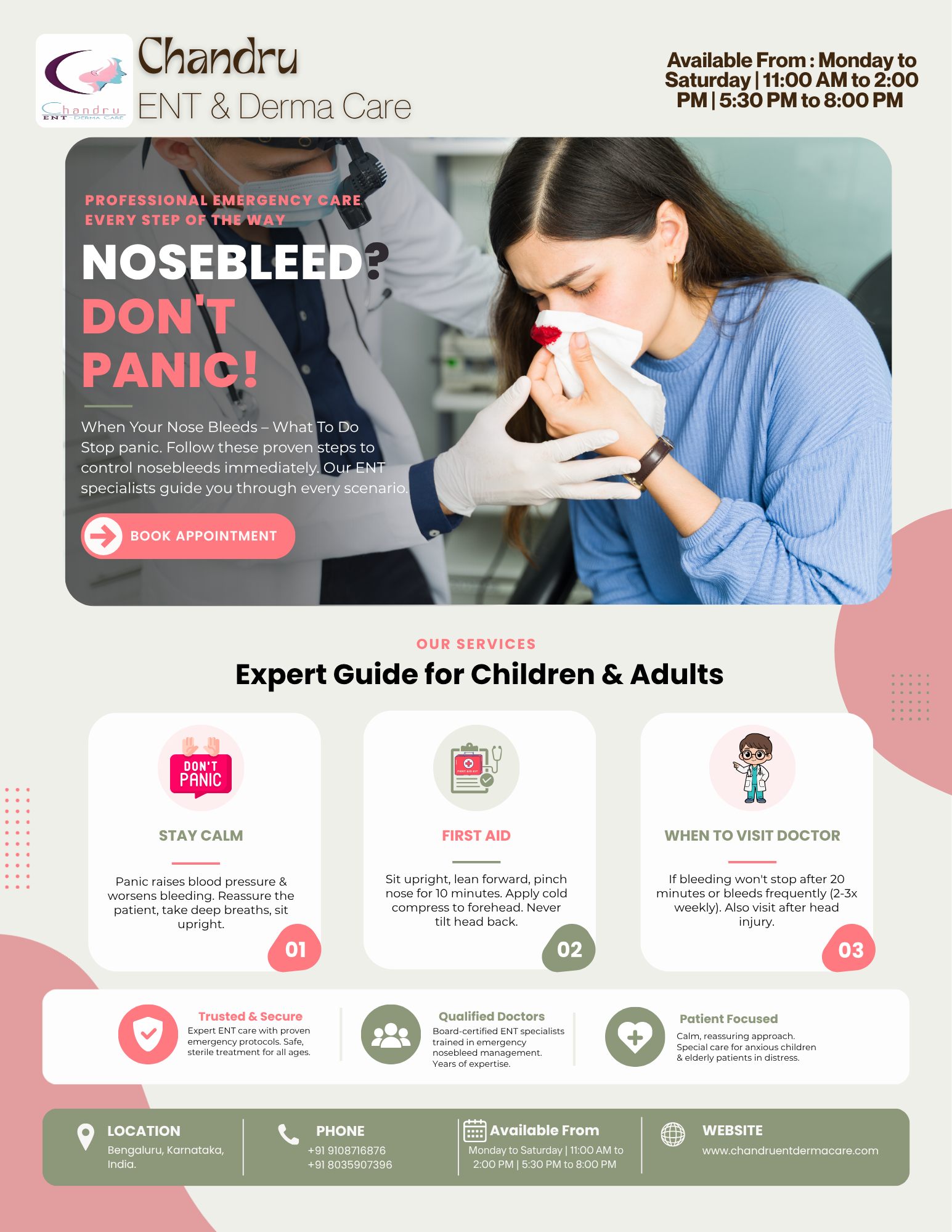
🩸 Nosebleed? Follow These 3 Steps
1. SIT UP & LEAN FORWARD
Keep the person sitting upright and lean slightly forward.
❌ Don't tilt the head backward.
Leaning forward helps prevent blood from flowing down the throat and being swallowed.
2. PINCH THE SOFT PART OF THE NOSE
Using your thumb and index finger, firmly pinch the soft part of the nose just above the nostrils.
Keep continuous pressure for around 10–15 minutes without repeatedly releasing it to check whether the bleeding has stopped. Breathe through the mouth.
3. STAY CALM
Most uncomplicated nosebleeds settle with proper pressure.
Once the bleeding has stopped, avoid picking or blowing the nose for a period of time, as this can disturb the healing area and trigger another bleed.
🚫 What NOT to Do During a Nosebleed
Some common reactions can actually make the situation worse.
Don't:
❌ Tilt the head backward
❌ Lie flat unnecessarily
❌ Keep releasing the nose to check the bleeding
❌ Pick or blow the nose immediately after the bleeding stops
❌ Ignore repeated episodes of nosebleeding
The most important first-aid measure is firm, continuous pressure on the soft part of the nose while leaning forward.
👶 What About Nosebleeds in Children?
Nosebleeds are common in children and are usually related to irritation of the delicate nasal lining.
Children may experience them because of:
- Nose picking
- Dry nasal passages
- Colds and allergies
- Frequent or forceful nose blowing
- Minor trauma
Try to keep the child calm. Sit them upright, lean them forward and apply firm pressure to the soft part of the nose for 10–15 minutes.
If nosebleeds are happening repeatedly, an ENT evaluation can help identify possible triggers and determine whether further treatment is needed.
🚨 When Is a Nosebleed an Emergency?
Don't simply wait it out if:
🔴 The bleeding is very heavy
🔴 It continues despite sustained pressure
🔴 The person feels faint, weak or light-headed
🔴 There is difficulty breathing
🔴 The nosebleed follows a significant injury to the head or face
🔴 There are frequent or recurrent nosebleeds
Persistent or significant bleeding may require medical treatment, such as identifying and sealing the bleeding vessel or nasal packing, depending on the cause and clinical assessment.
Why Do Some People Keep Getting Nosebleeds?
One nosebleed may be a simple episode. Repeated nosebleeds deserve a closer look.
An ENT specialist may assess the inside of the nose for:
- A prominent or easily bleeding blood vessel
- Persistent dryness or crusting
- Nasal inflammation or infection
- Allergy-related irritation
- Injury or structural problems
- Medication-related bleeding
- Other less common causes
If the bleeding point can be identified, treatments such as cauterisation may sometimes be considered.
🌿 Preventing Recurrent Nosebleeds
If you or your child is prone to nosebleeds, keeping the nasal lining from becoming excessively dry and avoiding unnecessary irritation may help.
Depending on the cause, an ENT specialist may recommend appropriate saline sprays or nasal moisturising measures. Avoid using medicated nasal products routinely unless they have been recommended for you.
And remember:
A nosebleed is common. Repeated nosebleeds shouldn't simply be ignored.
👂 Expert ENT Care for Children & Adults
At Chandru ENT & Derma Care, we provide evaluation and management of ENT conditions affecting children and adults, including recurrent nosebleeds.
Our approach focuses on identifying why the bleeding is happening, controlling the problem appropriately and helping reduce the chance of recurrence.
Nosebleed? Don't Panic. Know the Right First Aid.
If nosebleeds are frequent, prolonged, heavy or associated with other symptoms, consult an ENT specialist for proper evaluation.
Chandru ENT & Derma Care
Trusted Care • Qualified Doctors • Patient-Focused Treatment
Medical Disclaimer: This article is intended for general health education and does not replace an examination or diagnosis by a qualified healthcare professional. Treatment recommendations vary depending on the patient's age, symptoms, medical history and cause of bleeding.
 ENT Treatment Skin Care Hair Treatment Cosmetology Laser Treatments Facial Surgery
Leave a Comment