

What Is Lip Reduction?
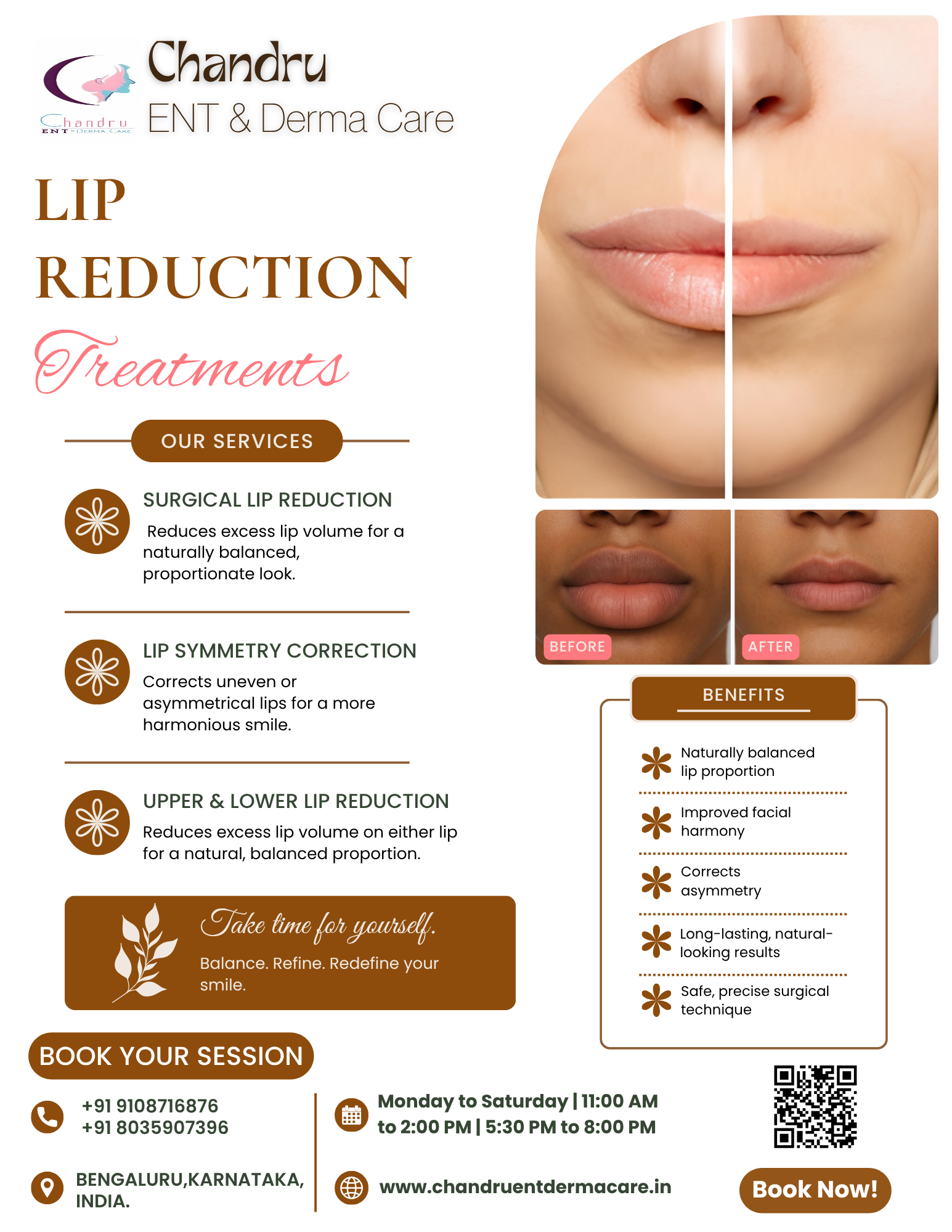
Lip reduction is a surgical procedure that reduces excess lip volume to help create a more balanced relationship between the lips and the rest of the face.
Unlike non-surgical treatments that add volume, lip reduction works in the opposite direction — carefully removing a measured amount of tissue to refine proportion and symmetry.
Because it is a surgical procedure, it involves a proper clinical assessment, informed consent and a recovery period. It is not a quick cosmetic touch-up, and suitability is decided only after a detailed consultation.
Types of Lip Reduction Approaches
The right approach depends entirely on your individual anatomy and goals, as determined during consultation.
1. UPPER OR LOWER LIP REDUCTION
Reduces excess volume in either the upper or lower lip individually, where only one lip appears disproportionate.
2. UPPER & LOWER LIP REDUCTION
Addresses both lips together to help achieve overall balance when both appear fuller than desired.
3. LIP SYMMETRY CORRECTION
Focuses on uneven or asymmetrical lips, aiming for a more harmonious, even appearance.
The specific plan is always tailored to the individual — there is no single standard approach suitable for everyone.
🌿 Who Might Consider Lip Reduction?
Lip reduction may be considered by people who:
- Feel their lips appear disproportionately full
- Have noticeable lip asymmetry
- Experience imbalance between the upper and lower lip
- Wish to refine lip proportion for better facial harmony
- Have realistic expectations about surgical outcomes
A thorough consultation is essential. A qualified surgeon will assess your anatomy, discuss your goals and advise whether the procedure is appropriate for you.
🩺 What to Expect With the Procedure
Understanding the process helps you feel informed and prepared.
- Consultation and assessment — Your lips, facial proportions, medical history and goals are evaluated in detail
- Planning — The approach and amount of reduction are discussed and planned individually
- Anaesthesia — The procedure is typically performed under local anaesthesia for comfort
- The procedure — A measured amount of tissue is carefully removed, usually through incisions placed inside the lip
- Recovery — Some swelling, tenderness or bruising is normal in the initial healing period
Because incisions are generally made on the inner surface of the lip, visible external scarring is usually minimal, though healing varies from person to person.
⏳ Recovery and Healing
Recovery is a gradual process, and patience is important.
General points to expect:
- Initial swelling — Swelling and tenderness are normal in the first days
- Soft diet — A soft or liquid diet may be advised initially
- Oral hygiene care — Gentle care around the treated area is important
- Gradual settling — The final appearance becomes clearer only after swelling fully resolves, which can take several weeks
- Follow-up — Review visits help monitor healing
Your surgeon will give you specific aftercare instructions tailored to your procedure — following them closely supports better healing.
🚫 Setting Realistic Expectations
Clear expectations are essential for any surgical procedure.
Lip reduction does not:
❌ Deliver instant final results — swelling takes time to settle
❌ Guarantee a specific "ideal" shape identical for everyone
❌ Replace the need for careful surgical planning
❌ Come without a recovery period
❌ Produce identical outcomes for every individual
Results are intended to look natural and balanced, in proportion with your own features — not a dramatic or standardised change.
⚠️ Safety, Risks and Who Should Be Cautious
As with any surgical procedure, lip reduction carries potential risks, which your surgeon will explain in detail during consultation. These can include swelling, bruising, temporary altered sensation, and — as with all surgery — a small risk of infection or healing-related issues.
The procedure may not be advisable for people who:
🔴 Have unrealistic expectations about the outcome
🔴 Have active infection or inflammation in the area
🔴 Have certain medical conditions affecting healing or clotting
🔴 Are pregnant or breastfeeding
🔴 Have specific concerns identified during medical assessment
This is why proper evaluation, informed consent and an honest discussion of risks always come first. Surgery should only be performed by a qualified professional in an appropriate clinical setting.
🌟 A Balanced, Individualised Approach
At Chandru ENT & Derma Care, our approach to any facial procedure begins with understanding your features, your concerns and what is realistically achievable.
Rather than aiming for a single "look," our focus is on careful assessment, honest guidance and a treatment plan suited to your individual anatomy — with facial harmony and natural-looking balance as the priority.
Considering Lip Reduction? Begin With a Consultation.
The right first step is a detailed assessment with a qualified professional, who can discuss whether lip reduction — or another approach — suits your features and goals, and explain the procedure and its considerations in full.
Chandru ENT & Derma Care
Trusted Care • Qualified Doctors • Patient-Focused Treatment
Medical Disclaimer: This article is intended for general health and aesthetic education only and does not constitute medical advice, diagnosis or a recommendation for surgery. Lip reduction is a surgical procedure whose suitability, risks and results depend on individual factors. Results vary from person to person and are not guaranteed. Always consult a qualified, registered surgeon for personalised advice and a full discussion of risks before considering any surgical treatment.
 ENT Treatment Skin Care Hair Treatment Cosmetology Laser Treatments Facial Surgery
Leave a Comment